

Bahrain Real Estate Taxes: What You Need to Know
Bahrain has emerged as one of the Gulf region’s most attractive real estate markets, offering a favorable investment environment, modern infrastructure, and opportunities for both local and foreign investors. One of the key advantages of owning property in Bahrain is its relatively straightforward tax structure. However, buyers and investors should still understand the various taxes, registration charges, and ongoing fees associated with property ownership.
This guide explains the property taxes and fees in Bahrain and helps buyers make informed investment decisions.
Does Bahrain Have Property Tax?
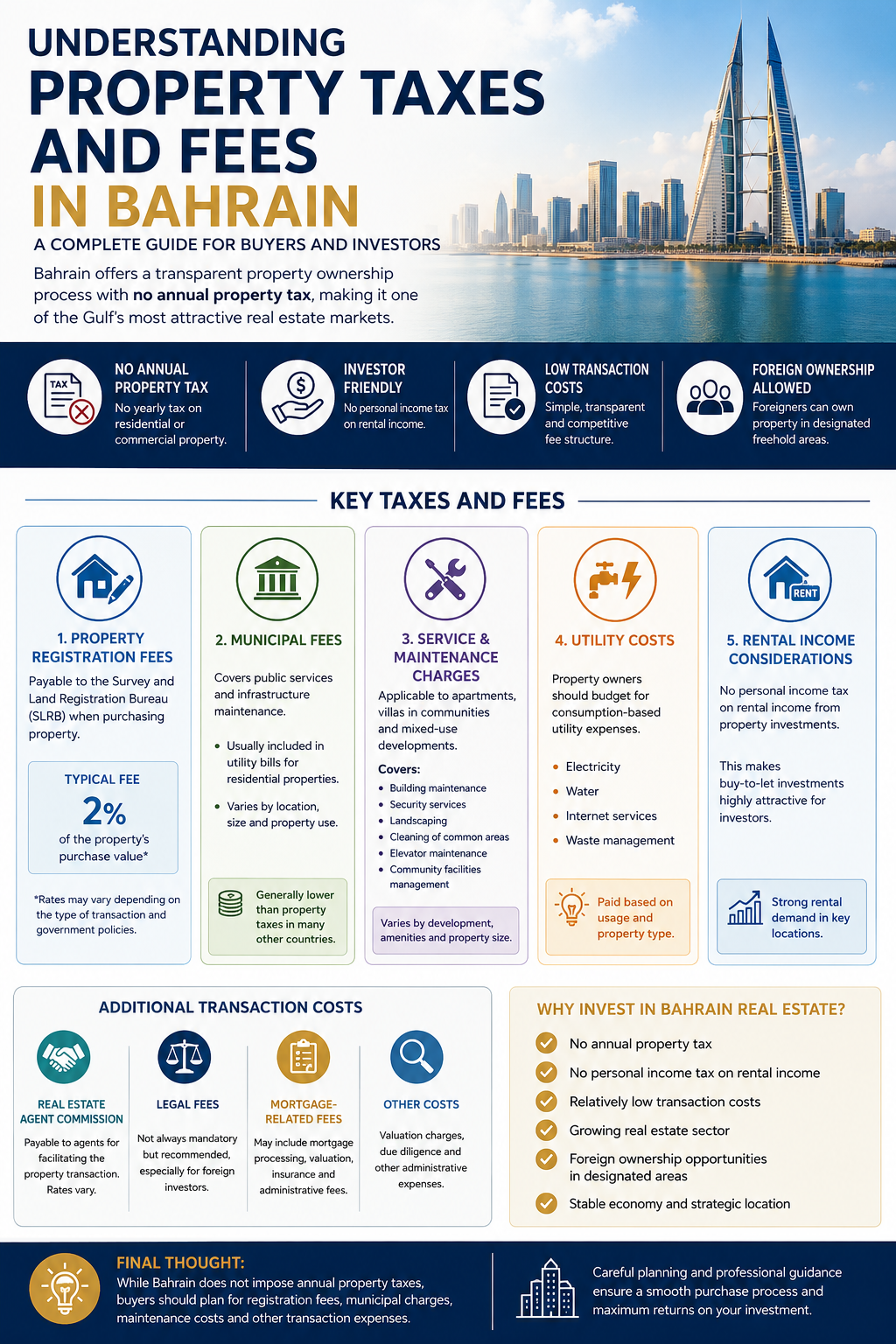
Unlike many countries, Bahrain does not impose an annual property tax on residential or commercial property owners. This absence of recurring property taxes is one of the reasons Bahrain continues to attract international investors seeking stable returns and lower ownership costs.
Property owners are not required to pay yearly taxes based on the value of their property, making long-term ownership more affordable compared to many global real estate markets.
Property Registration Fees
Although Bahrain does not charge annual property taxes, buyers must pay registration fees when purchasing real estate.
The Survey and Land Registration Bureau (SLRB) oversees property registration in Bahrain. When a property transaction takes place, a registration fee is typically charged based on the property’s value.
The registration fee generally ranges around 2% of the property’s purchase value, although specific rates may vary depending on the nature of the transaction and any government policies in effect at the time of purchase.
Buyers should verify the latest fee structure before completing a transaction.
Municipal Fees
Property owners and tenants may be subject to municipal fees, which contribute to public services and infrastructure maintenance.
For residential properties, municipal charges are often included in utility bills and may vary depending on the property’s location, size, and usage. Commercial properties may have different municipal fee structures.
These charges are generally lower than property taxes imposed in many other countries.
Service and Maintenance Charges
Owners of apartments, villas within gated communities, and properties in mixed-use developments are often required to pay service charges.
These fees cover:
- Building maintenance
- Security services
- Landscaping
- Cleaning of common areas
- Elevator maintenance
- Community facilities management
Service charges vary significantly depending on the development, amenities provided, and property size.
Luxury developments typically have higher maintenance fees due to premium facilities such as swimming pools, gyms, concierge services, and private security.
Utility Costs
Property owners should also account for utility expenses, including:
- Electricity
- Water
- Internet services
- Waste management
Utility costs depend on consumption levels and property type. Investors purchasing rental properties should clearly define responsibility for utility payments within tenancy agreements.
Rental Income Considerations
Bahrain generally does not impose a separate personal income tax on rental income earned from property investments. This can make buy-to-let investments particularly attractive for investors seeking rental yields.
However, investors operating through companies or large-scale commercial structures should seek professional tax advice to understand any corporate obligations that may apply.
Costs for Foreign Property Buyers
Foreign nationals are permitted to purchase property in designated freehold areas across Bahrain. The fees applicable to foreign buyers are generally similar to those for local purchasers.
However, foreign investors should budget for:
- Legal consultation fees
- Property valuation charges
- Registration costs
- Real estate agency commissions
- Due diligence expenses
Working with experienced real estate professionals can help ensure a smooth and compliant purchasing process.
Additional Transaction Costs
Beyond registration fees, buyers may encounter several one-time expenses, including:
Real Estate Agent Commission
Real estate agents typically charge a commission for facilitating property transactions. Rates may vary depending on the agency and transaction type.
Legal Fees
Hiring a lawyer is not always mandatory but is strongly recommended, especially for foreign investors. Legal professionals can review contracts, verify ownership records, and ensure regulatory compliance.
Mortgage-Related Fees
Buyers financing their purchase through a bank may incur:
- Mortgage processing fees
- Property valuation fees
- Insurance costs
- Administrative charges
These costs should be factored into the overall acquisition budget.
Why Bahrain Remains Attractive for Property Investors
Several factors make Bahrain a compelling real estate investment destination:
- No annual property tax
- No personal income tax on rental income
- Relatively low transaction costs
- Growing real estate sector
- Foreign ownership opportunities in designated areas
- Strong rental demand in key locations
These advantages contribute to a favorable environment for both individual buyers and institutional investors.
Final Thoughts
Understanding Bahrain’s property taxes and fees is essential for anyone considering a real estate purchase. While the country does not impose annual property taxes, buyers should be aware of registration fees, municipal charges, maintenance costs, and other transaction-related expenses.
Careful financial planning and professional guidance can help investors maximize returns while ensuring compliance with local regulations. Whether purchasing a home, rental property, or commercial asset, Bahrain’s investor-friendly tax environment continues to make it one of the Gulf region’s most appealing real estate markets.

Join The Discussion